
(español mas abajo)

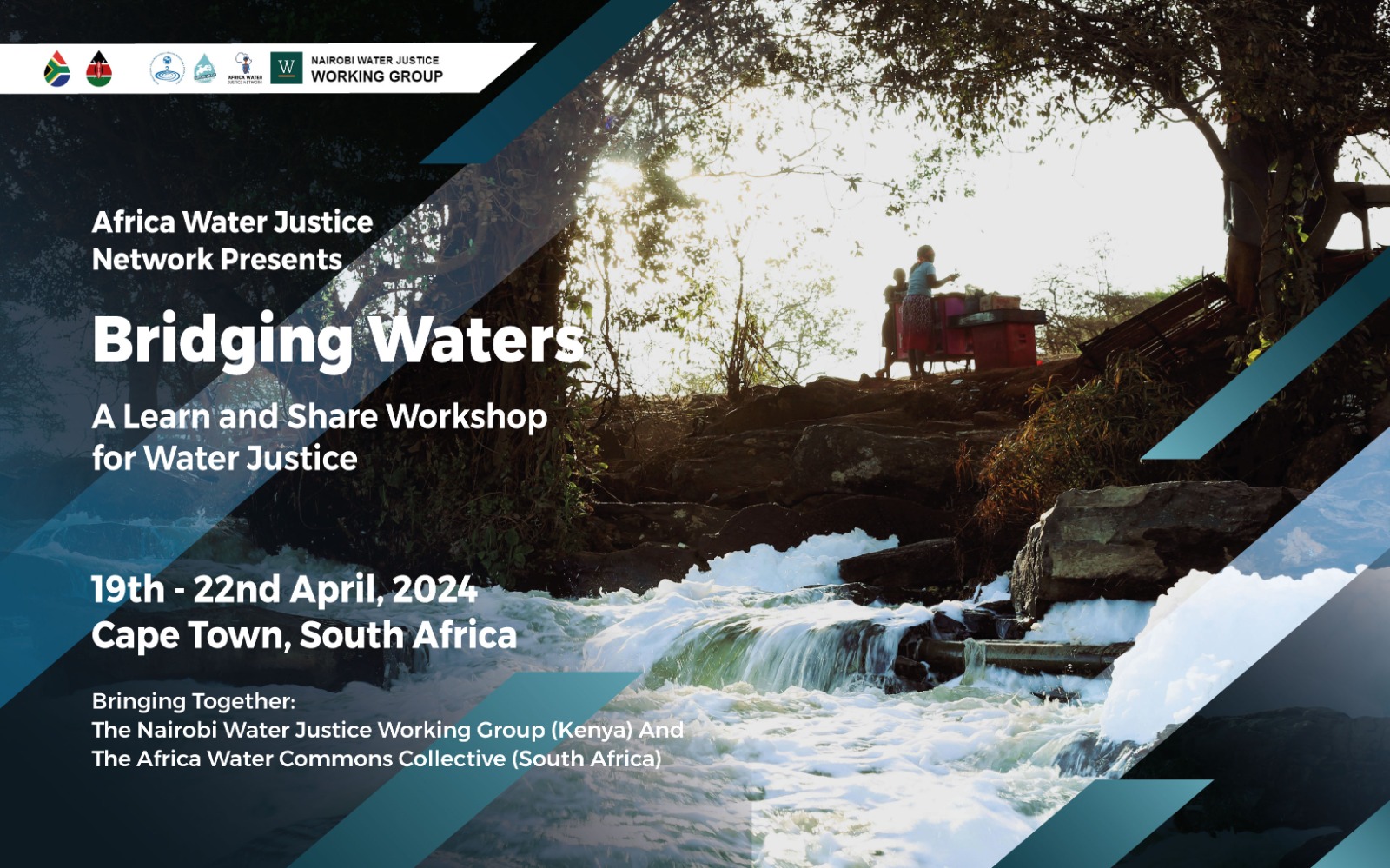
Water Justice activists from Kenya and South Africa recently convened in Cape Town for the inaugural Bridging Waters event, a collaborative initiative organised by the Africa Water Justice Network in collaboration with the Blue Planet Project, the African Water Commons Collective and the Nairobi Water Justice Working Group. The gathering marked a significant departure from the traditional top-down governmental dialogues and instead emphasised grassroots movement- and community-driven inputs to water delivery and management challenges.
Bridging Waters
The Bridging Waters idea began as a counter action to meetings between City of Nairobi and City of Cape Town government officials to build capacity for effective water management. The African Mirror noted that the challenges they plan to collaborate on range from city organization and water and sewerage management to urban settlement and development and joblessness. The new collaborative approach could go a long way towards propagating common development strategies. Indeed, it was post-visit adulation by officials of the City of Nairobi about Cape Town water management that caused questions to be asked, mainly by Kenyans in the Africa Water Justice Network, about the truth of the reports. The South African members of the Network were quick to offer more context around the situation of so-called effective management of water delivery in Cape Town, which, simply put, means effectiveness for only the rich and privileged and in essence an effective class-based water apartheid. These discussions continued and a suggestion came up to explore the possibility of a meeting between people of different cities and countries just as the governments are also meeting. The objective of such meetings is for people to learn and share from each other’s water struggles and, most importantly, how communities are responding to such struggles and their practical approaches to ensuring households and individuals are water secure. Fortunately, the Wallace Global Fund thought the proposed people’s meetings were possible and here we are with the first Bridging Waters event which lived up to its objective.

Participants
The meeting brought together six water justice activists from Kenya and 20 from Cape Town. Of the Kenyan participants, four came from the Nairobi Water Justice Working Group, one from Mombasa and the other from Mgori. The Cape Town participants were mainly members of the Western Cape Water Caucus and the African Water Commons Collective from the Khayelitsha and Mitchells Plain areas of Cape Town. Though the event was planned for activists from Nairobi and Cape Town, two persons were brought from the neighboring counties of Mombasa and Mgori to preempt similar actions there as in Cape Town.
Programme
One of the pivotal moments of the event was the sharing of insights into ongoing campaigns and successes. The Nairobi activists spoke about their successful protests and campaign to stop the passage of a bill to privatise Nairobi Water. The activist from Mombasa showed a video of the terrible conditions of access to water and sanitation for many communities. He said water had already been privatised in their county and the company in-charge in the county is Veolia. The activist from Gregori also presented the deplorable conditions of access to water in their county and, though the system has not been privatised, the threat exists.
Meanwhile, their South African counterparts demonstrated the strength of their community mobilisation and coordination. Their key concerns shared with the Kenyans include automatic water disconnections of low income households with smart prepaid water meters and sewerage blockages resulting in effluents flowing into the streets in mostly low income areas. They presented to the Kenyans that this is the “effective water management system” the city of Cape Town wants to export to other African cities.
A study visit to communities in Cape Town showed how poor access to water and bad sewerage conditions for both African and so-called Coloured townships. The site visits to neighborhoods further underscored the urgent need for equitable water distribution and improved infrastructure.
Strategies and Solidarity
Crucially, the Bridging Waters event fostered a spirit of solidarity and collaboration among activists from different countries and cultures. Recognizing the common challenges and shared goals, participants committed to mutual support and knowledge exchange in their ongoing organising endeavors. Specifically, they decided to collaborate around strategies of community mobilisation and effective public participation with an important focus on budget advocacy.

Looking Ahead
The Bridging Waters initiative holds immense promise for building a closely knitted regional and global water justice network and voice to fight against the agenda of transnational corporations to privatise water services and resources everywhere. Specifically, the initiative will help link and unite the advocacy of communities deprived of water because of the actions of privatisation-exporting and receiving countries on the continent. This will advance the cause of water justice across Africa and beyond. By amplifying the voices of marginalized communities and promoting grassroots solutions, activists are showing the gaps and contestations around the so-called effective policies of governments.
The impact of the first Bridging Waters event will surely go beyond the shores of Cape Town and Nairobi. It has pointed the way to a people-to-people meeting guided by the primary principles of equity and solidarity instead of profits and commercial viability. All people everywhere have the right to live and the attempt to use market principles to ignore or neglect low income households and communities is fundamentally wrong and immoral.
See the original post on the Africa Water Justice Network website here.
Tendiendo Puentes (Bridging Waters): Uniendo a las y los organizadores para encontrar soluciones desde abajo
Activistas y organizadores por la justicia del agua de Kenia y Sudáfrica se reunieron recientemente en Ciudad del Cabo en el acto inaugural de Bridging Waters, una iniciativa de colaboración organizada por la Red Africana por la Justicia del Agua en colaboración con el Proyecto Planeta Azul, el African Water Commons Collective y el Grupo de Trabajo sobre Justicia del Agua de Nairobi. El encuentro supuso un cambio significativo con respecto a los tradicionales diálogos gubernamentales que se hacen desde arriba y, en su lugar, se hizo hincapié en las soluciones de los movimientos de base y las comunidades en relación a los retos del suministro y la gestión del agua.
Uniendo las aguas
La idea de Bridging Waters surgió como contrapartida a las reuniones celebradas entre funcionarios de las ciudades de Nairobi y Ciudad del Cabo con el fin de crear capacidad para una gestión eficaz del agua. El African Mirror señaló que los retos sobre los que se busca colaborar abarcan desde la organización de la ciudad y la gestión del agua y el alcantarillado hasta los asentamientos y el desarrollo urbanos y la falta de empleo. Este nuevo enfoque de colaboración podría contribuir, en gran medida, a socializar estrategias de desarrollo comunes. De hecho, fueron las lisonjas posteriores a la visita de los funcionarios de la ciudad de Nairobi sobre la gestión del agua de Ciudad del Cabo lo que desembocó en el planteamiento de preguntas, principalmente de los kenianos de la Red africana por la Justicia del Agua, sobre la veracidad de los informes. Los miembros sudafricanos de la Red se apresuraron a ofrecer más contexto en torno a la situación de la llamada “gestión eficaz del suministro de agua en Ciudad del Cabo”, que, en pocas palabras, significa eficacia sólo para los ricos y privilegiados y, en esencia, un apartheid efectivo del agua basado en las clases sociales. Estos debates continuaron y surgió la sugerencia de explorar la posibilidad de celebrar una reunión entre personas de distintas ciudades y países, al igual que se reúnen los gobiernos. El objetivo de estas reuniones es que la gente aprenda y comparta las luchas de los demás por el agua y, lo que es más importante, cómo las comunidades están respondiendo a estas luchas y sus enfoques prácticos para garantizar que los hogares y las personas tengan seguridad hídrica. Afortunadamente, el Wallace Global Fund pensó que los intercambios propuestos eran posibles y aquí estamos con el primer evento Bridging Waters, que estuvo a la altura de su objetivo.
Participantes
El encuentro reunió a seis activistas por la justicia del agua de Kenia y a 20 de Ciudad del Cabo. De los participantes kenianos, cuatro procedían del Grupo de Trabajo sobre Justicia del Agua de Nairobi, uno de Mombasa y otro de Mgori. Los participantes de Ciudad del Cabo eran principalmente miembros del Western Cape Water Caucus y del African Water Commons Collective de las zonas de Khayelitsha y Mitchells Plain de Ciudad del Cabo. Aunque el evento estaba previsto para activistas de Nairobi y Ciudad del Cabo, se trajo a dos personas de los condados vecinos de Mombasa y Mgori para preparar allí acciones similares a las de Ciudad del Cabo.
Programa
Uno de los momentos clave del acto fue el intercambio de impresiones sobre las campañas en curso y sus éxitos. Los activistas de Nairobi hablaron del éxito de sus protestas y de su campaña para impedir la aprobación de un proyecto de ley para privatizar Nairobi Water. El activista de Mombasa mostró un vídeo sobre las terribles condiciones de acceso al agua y al saneamiento de muchas comunidades. Afirmó que el agua ya había sido privatizada en su condado y que la empresa encargada es Veolia. El activista de Gregori también expuso las deplorables condiciones de acceso al agua en su condado y, aunque el sistema no se ha privatizado, la amenaza está latente.
Mientras tanto, sus homólogos sudafricanos demostraron la fuerza de la movilización y coordinación comunitarias. Las principales preocupaciones, compartidas con los kenianos, incluyen la desconexión automática del agua de los hogares con bajos ingresos que cuentan con medidores prepago inteligentes y las obstrucciones en el alcantarillado, que provocan el flujo de las aguas servidas por las calles en zonas mayoritariamente de bajos ingresos. Es este, el “sistema eficaz de gestión del agua” que la ciudad de Ciudad del Cabo quiere exportar a otras ciudades africanas, como Kenia.
Una visita de campo a comunidades de Ciudad del Cabo puso de manifiesto el deficiente acceso al agua y las malas condiciones del alcantarillado tanto de los barrios africanos como de los llamados barrios de color. Las visitas a los barrios pusieron aún más de relieve la urgente necesidad de una distribución equitativa del agua y mejoras en la infraestructura.
Estrategias y solidaridad
Bridging Waters impulsó un espíritu de solidaridad y colaboración entre activistas de distintos países y culturas. Reconociendo los retos comunes y los objetivos compartidos, los participantes se comprometieron a apoyarse mutuamente y a intercambiar conocimientos en sus esfuerzos organizativos en curso. En concreto, decidieron colaborar en torno a estrategias de movilización comunitaria y participación pública efectiva, centrándose especialmente en la defensa del presupuesto.
De cara al futuro
La iniciativa Bridging Waters es muy prometedora para crear una red regional y mundial de justicia hídrica estrechamente entretejida y una voz que luche contra la agenda de las empresas transnacionales que buscan privatizar los servicios y recursos hídricos en todo el mundo. En concreto, la iniciativa ayudará a vincular y unir la defensa del agua por parte de las comunidades que han sido despojadas de este bien común debido a las acciones de los países exportadores y privatizadores en el continente. De este modo se avanzará en la causa de la justicia del agua en toda África y más allá del continente. Al amplificar las voces de las comunidades marginadas y promover soluciones de base, los activistas están señalando los vacíos en torno a las supuestas políticas eficaces de los gobiernos.
El impacto del primer Bridging Waters sin duda trascenderá las costas de Ciudad del Cabo y Nairobi. Ha señalado el camino hacia un encuentro entre las personas bajo los principios fundamentales de equidad y solidaridad en lugar de los beneficios económicos y la mercantilización. Todas las personas, en todas partes, tienen derecho a vivir dignamente, y el intento de utilizar los principios del mercado para ignorar o desatender a los hogares y comunidades de bajos ingresos es errónea e inmoral.