
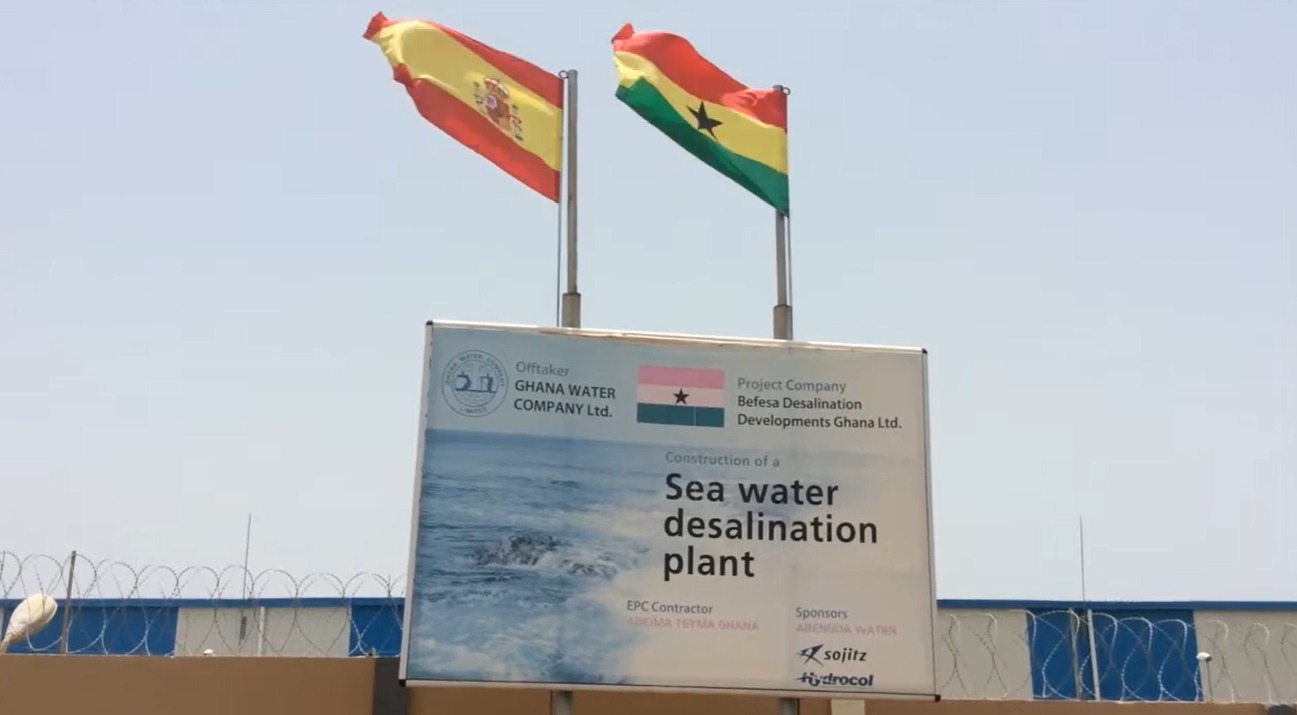
In September 2026, an International Chamber of Commerce tribunal ordered Ghana Water Limited to pay US$235 million over the Teshie-Nungua desalination plant in Accra. This price, nearly double the original cost of construction for the plant, leaves the Republic of Ghana directly liable under the sovereign guarantee backing the project. The Republic of Ghana was also found liable under the state guarantee behind the project.
The project, launched in 2011, was designed to produce 60,000 cubic metres of treated seawater a day for around 500,000 people across the communities of Teshie, Nungua, Spintex, Sakumono and La, areas long left underserved at the tail end of the water network.
However, instead of providing access to reliable water, the plant faced countless problems over the years, having been shut down several times in 2018 over flawed contract terms, in 2019 due to excess chemicals in the water, and again in 2024 following structural damage from heavy rains. Suffering from a severe lack of routine maintenance, the plant was shut down again in late 2025 and has remained completely idle ever since.
The continued non operation of this plant has affected water supply to communities within its catchment, increasing their reliance on alternative sources of water such as tanker water.

Leonard Shanquay, member of the Blue Planet Project (BPP) and Africa Water Justice Network (AWJN) at a press conference in Accra, Ghana on November 3, 2026
Privatized Profits, Public Risk
At a press conference on November 3 in Ghana, members of the Ghana Water Network raised concerns over the government’s plan to buy the Teshie-Nungua Desalination Plant. The network warns that this proposed acquisition, which seeks to secure state ownership of the Plant, risks passing the burden of high costs onto consumers through water tariffs.
In October 2024, the project company Befesa / Cox,the private Spanish infrastructure company behind the plant, and its lenders filed for arbitration at the International Chamber of Commerce (ICC).
On 17 September 2026, the ICC tribunal issued two final awards:
- Ghana Water must pay $235 million, plus interest from 1 April 2026
- Most of Ghana Water’s counterclaims were rejected
- Ghana Water was ordered to pay part of the company’s legal costs
- The Republic of Ghana was found liable under the state guarantee
This is in effect the danger of Public-Private Partnerships, which both produces high costs for governments and its citizens, and undermines the right to water for life, not for profit.
This is the high cost of water privatization, as when public utilities are handed over to private corporate interests under opaque deals, it not only reduces access to safe, reliable water, but risks passing the burden onto the communities at a time when access to water is more vital than ever.
To learn more:
https://asaaseradio.com/ghana-water-ordered-to-pay-us235m-over-teshie-desalination-dispute