
Resources
-

Autogestión, reclaiming the right to self-management of water
Twenty years after the Water War in Cochabamba (Bolivia), Marcela Olivera and Stefano Archidiacono reflect on “autogestión” of water as a practical and cultural dimension of the commons. A new piece for the series “Reimagining, remembering, and reclaiming water: from extractivism to commoning”. Although Bolivia was born as a centralist and unitarian state, there has always…
-

Dignity of the waters, a Blue Community in Chile
The Blue Planet Project is pleased to share a video about La Union in Petorca, Chile, a Blue Community.
-
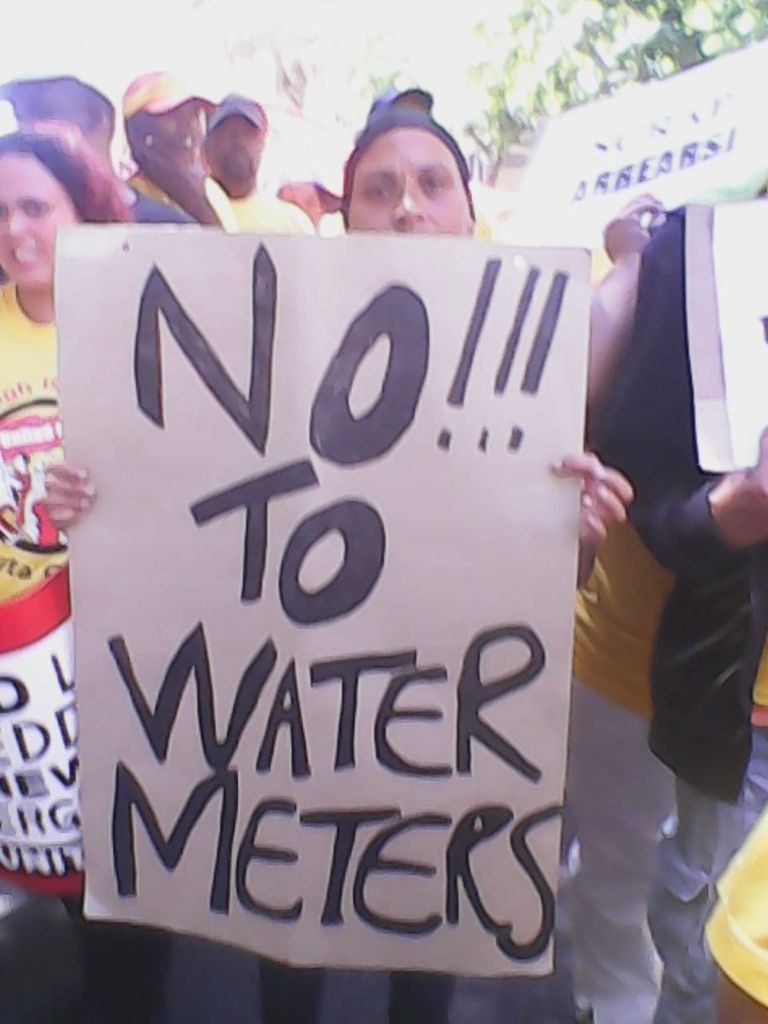
New Packaging, Same Deal: City of Cape Town’s New Proposal to Replace Water Management Devices with the Drip System will further Water Apartheid
The City of Cape Town seems to have finally realised, after 15 years of grassroots organizing that Water Management Devices (WMD) need to go. The bad news is that its new proposal will continue to deprive people of adequate water supplies.
-
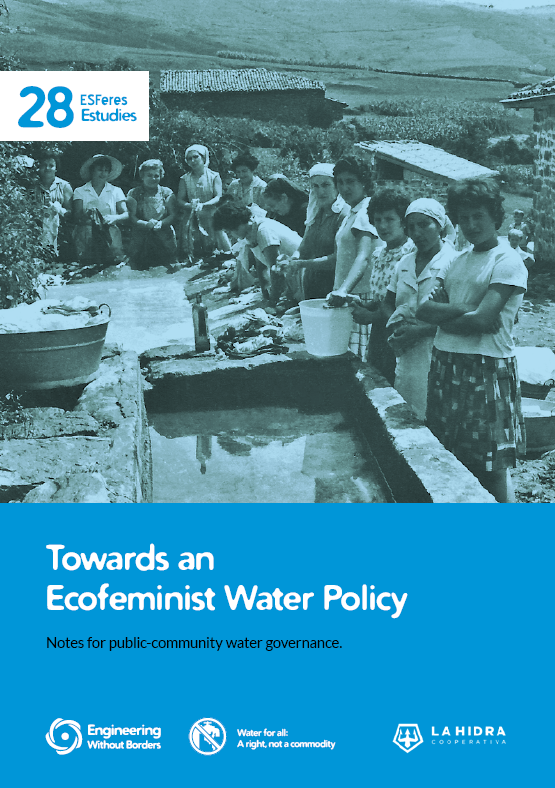
Towards an ecofeminist water policy: Notes for public-community water governance
Our partners, Engineering Without Borders, Catalunya, have released “Towards an ecofeminist water policy: Notes for public-community water governance.” “Water is an essential good for life and for many who see it and treat it as a big business. We have already seen the results of treating water as just another commodity, but what water policies…
-
Tasco: Protector of the Paramo, water and community management
For defending the water, for protecting the Paramo de Pisba against extractives and preventing the privatization of the community-managed water system, ASSOCTASCO was declared a Blue Community by the Blue Planet Project, Penca de Sabila and PAPC. Boyacá, Colombia, 2019.
-

SDG6: Water and sanitation are fundamental services, privatization is not a means of implementation!
The ambition and breadth of the United Nations’ Sustainable Development Agenda has been the object of both praise and ridicule. Some have scoffed at the sheer number of initiatives, describing the 17-goal and 169-target plan as the “leave no target behind” agenda. In addition, the global development plan was produced by a range of actors…
-
Spotlight on Sustainable Development 2018
Spotlight on Sustainable Development 2018: Exploring new policy pathways How to overcome obstacles and contradictions in the implementation of the 2030 Agenda Chapter 6 – (Re)municipalization of water – the right way towards achieving SDG Written By Meera Karunananthan, Blue Planet Project, and Satoko Kishimoto, Transnational Institute Full report (pdf, 3,5 MB) E-book (epub, 3,4…
-

The Fall of Prepaid Water Meters in Ghana: An account of civil society organizations’ campaign for human right to water
A new report by the Water Citizens’ Network in Ghana traces the history of resistance to pre-paid water metres and the successful campaign to stop the Ghanaian government’s most recent attempts to implement metering schemes. The report argues that the government’s latest initiative – a direct result of pressures from the World Bank and International…
-

Our Right to Water: Assessing progress five years after the UN recognition of the Human Rights to Water and Sanitation
On July 28, 2010, the United Nations General Assembly adopted a historic resolution recognizing the human rights to water and sanitation as “essential for the full enjoyment of the right to life.” This paper examines what has transpired in the five years since these resolutions were adopted and what remains to be done.
-
La defensa del agua: el corazón de la lucha contra el neoliberalismo en El Salvador
English Este documento examina tres estrategias utilizadas a nivel nacional por coaliciones de movimientos sociales en El Salvador con el fin de hacer frente a la crisis del agua al desafiar sus causas sistémicas. Estas estrategias incluyen: una prohibición nacional de la minería metálica, una enmienda constitucional que reconoce el derecho humano al agua y…